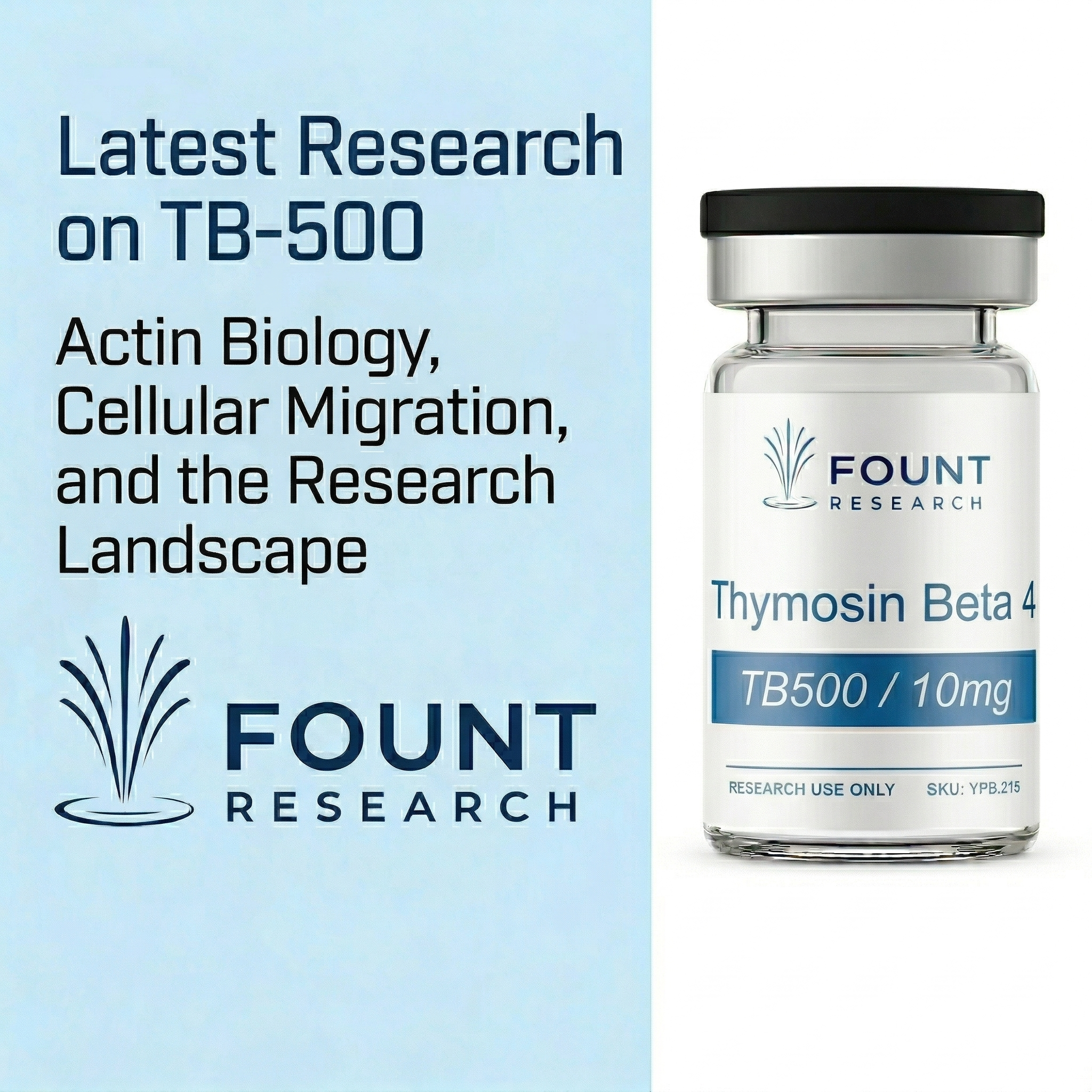
TB-500 (Thymosin Beta-4): Actin Biology, Cellular Migration, and the Research Landscape
TB-500 is the research designation for a synthetic analog of Thymosin Beta-4 (Tβ4) — a naturally occurring 43-amino acid peptide first isolated from thymic tissue in the 1960s and subsequently found to be present throughout virtually all mammalian cells. It is one of the most abundant intracellular peptides identified in biological systems, with concentrations of 0.4–0.8 mM documented in most cell types, and particularly high concentrations in blood platelets and wound fluid.
Thymosin Beta-4 occupies a unique position in cell biology as the primary G-actin sequestering molecule in mammalian cells — a function that places it at the center of cytoskeletal regulation, cell motility, and the early-stage tissue repair cascade. TB-500, as the synthetic analog, replicates the active region of the full Thymosin Beta-4 protein and has been evaluated across a wide range of tissue injury research models including musculoskeletal, cardiac, neurological, corneal, and dermal systems.
This article provides an educational overview of TB-500's molecular characteristics, primary mechanisms, and the current state of the peer-reviewed research literature. All content is for informational purposes only.

MOLECULAR PROFILE
Thymosin Beta-4 is a 43-amino acid peptide with a molecular weight of approximately 4,963 daltons. Its structure contains several functionally distinct regions:
- Actin-Binding Domain (residues 5–20): Contains the LKKTET sequence critical for G-actin sequestration, with a binding constant (Kd) of approximately 0.5 μM
- Nuclear Localization Signal (residues 26–31): The KETIE sequence facilitating nuclear translocation
- C-terminal Region (residues 32–43): Involved in receptor interactions and cellular signaling
- Integrin-Binding Motif: Facilitates cell migration and wound healing responses
The compound contains a characteristic N-terminal acetylation, which is essential for its biological stability and activity. TB-500, as the synthetic variant, encompasses the active region of Thymosin Beta-4 and is designed to optimize research bioavailability and stability while maintaining biological activity consistent with the endogenous peptide.

PRIMARY MECHANISM: G-ACTIN SEQUESTRATION
The foundational and best-characterized mechanism of TB-500 involves its high-affinity binding to monomeric G-actin (globular actin). This 1:1 stoichiometric interaction — with a dissociation constant of approximately 0.5–0.7 μM — prevents G-actin from polymerizing into F-actin (filamentous actin).
Understanding why this matters requires context: actin dynamics sit at the core of cell behavior. When a cell needs to migrate — toward a wound site, toward a chemical signal, toward a site of injury — it requires rapid, controlled cytoskeletal remodeling. The ability to rapidly assemble and disassemble actin filaments determines how effectively a cell can form the protrusions (lamellipodia and filopodia) that enable directed movement.
By maintaining a reservoir of unpolymerized G-actin, TB-500 enables this rapid cytoskeletal response. Research published in the Journal of Cell Science and related literature has documented that cells with higher Tβ4 expression exhibit enhanced migratory capacity — a finding directly relevant to understanding how the peptide influences repair responses in tissue injury models.
In practical research terms: TB-500's actin-sequestering activity is the upstream mechanism that enables much of what researchers subsequently observe in wound healing, cell migration, and tissue repair investigations.

DOCUMENTED RESEARCH MECHANISMS AND FINDINGS
1. Cellular Migration Enhancement
One of TB-500's most significant documented research findings involves its promotion of cellular migration. Research published in The FASEB Journal — a landmark study in the TB-500 research literature — demonstrated that Thymosin Beta-4 administration increased reepithelialization by 42% over saline controls at 4 days post-wounding and by as much as 61% at 7 days. These figures have been widely cited in subsequent TB-500 research literature.
TB-500 acts as a chemotactic agent — recruiting progenitor cells, stem cells, and fibroblasts toward the site of tissue damage. This recruitment function is distinct from but complementary to its actin-regulatory role.
2. Angiogenesis
Independent of its actin-binding function, TB-500 promotes angiogenesis through direct upregulation of vascular endothelial growth factor (VEGF) expression and enhancement of endothelial cell migration. This pro-angiogenic activity ensures that newly forming or repairing tissue receives adequate blood supply — a rate-limiting factor in tissue repair processes.
The FASEB Journal study also documented increased collagen deposition and angiogenesis in TB-500-treated wound models compared to controls.
3. Anti-Inflammatory Activity
TB-500 has been documented to downregulate pro-inflammatory cytokines and reduce oxidative stress in the acute phase of injury models. Anti-inflammatory activity has been observed across multiple tissue systems in the published literature, including musculoskeletal, cardiac, and corneal injury models.
A 2024 study published in Frontiers in Immunology investigated pro-resolving pathways activated by Thymosin Beta-4 during Pseudomonas aeruginosa-induced keratitis (PMID: 39380984), documenting the peptide's anti-inflammatory effects in an ocular infection model.
4. Reduced Fibrosis
By modulating myofibroblast activity, TB-500 has been associated with reduced deposition of excessive scar tissue in research models. This finding is particularly relevant in musculoskeletal injury research contexts, where excess fibrosis can limit functional recovery and increase re-injury risk.
5. Cardiac and Neurological Research Models
TB-500's research applications extend significantly beyond musculoskeletal contexts. Cardiac research models have documented:
- Thymosin Beta-4 activation of capsulin-positive progenitor cells in injured cardiac tissue
- Improved ventricular function metrics in myocardial infarction models
- Upregulation of Chitinase 3-like-1, which plays roles in tissue repair and inflammatory regulation
Neurological research has documented Tβ4's role in promoting oligodendrogenesis (myelin-producing cell development) in demyelinating CNS models, and peptide fragments of Tβ4 have been investigated for effects on hippocampal neurogenesis in preclinical models.
6. Corneal Research
Thymosin Beta-4 has an established research presence in corneal biology. Multiple published studies have examined its role in corneal wound healing and antibacterial defense. Research published in International Immunopharmacology (2023) by Sosne et al. documented TB-500's potential as an adjunct in bacterial keratitis models.

TB-500 AND BPC-157: A FREQUENTLY RESEARCHED COMBINATION
In the research literature, TB-500 and BPC-157 are frequently studied in conjunction. A 2025 review published in PMC (Therapeutic Peptides in Orthopaedics, PMCID: PMC12753158) noted that wound-healing peptides including BPC-157, TB-500, and GHK-Cu "promote angiogenesis, integrin-mediated extracellular matrix remodeling, and fibroblast activation" — establishing a mechanistic rationale for their combined research investigation.
The compounds work through distinct but complementary mechanisms: BPC-157 primarily through VEGFR2 activation and growth hormone receptor expression, TB-500 through actin-sequestration-mediated cell migration and direct VEGF upregulation. This mechanistic distinction has driven significant research interest in their combined administration in preclinical models.
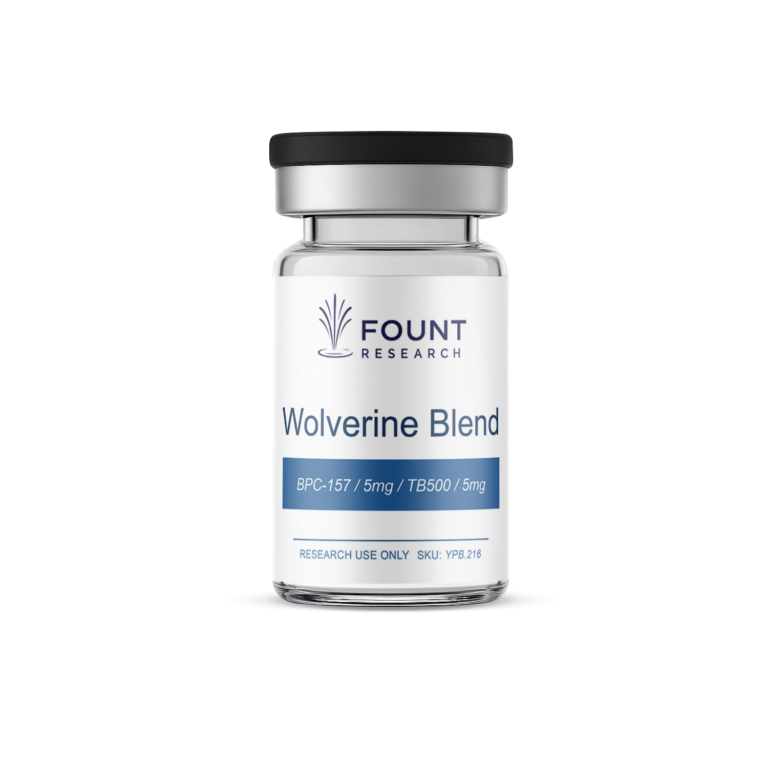
Fount Research carries both TB-500 and BPC-157 individually, as well as the Wolverine Blend — a research formulation combining both compounds.

REGULATORY AND RESEARCH CONTEXT
Like BPC-157, Thymosin Beta-4/TB-500 has not received FDA approval for therapeutic use in humans and is classified as a research compound. It is listed on the WADA Prohibited List for competitive athletes.
The existing research base is predominantly preclinical. While the mechanistic foundation for TB-500's biological activity is well-established in the literature, robust human clinical trial data remains limited, and the compound should be approached strictly as a research-stage material.

RESEARCH AVAILABILITY
TB-500 (Thymosin Beta-4) is available from Fount Research in 5mg and 10mg formats. All batches are third-party tested and supplied with Certificate of Analysis documentation.
[View TB-500 in the Fount Research Catalog →]
[View the Wolverine Blend (BPC-157 + TB-500) →]

⚠ RESEARCH USE ONLY DISCLAIMER
This article is intended for educational and informational purposes only. TB-500 is sold by Fount Research strictly for in-vitro laboratory research and scientific investigation. It is not intended for human or veterinary use, consumption, or therapeutic application. This content does not constitute medical advice and should not be interpreted as a recommendation for any form of use. Always consult a licensed healthcare professional for any health-related questions.

REFERENCES:
- Vasireddi N, et al. "Therapeutic Peptides in Orthopaedics." PMC12753158. 2025.
- The FASEB Journal — Thymosin Beta-4 wound healing reepithelialization study. PMID: 10469335.
- PMC8724243 — "Progress on the Function and Application of Thymosin Beta-4"
- PMC8228050 — "Utilizing Thymosin Beta-4 to Remind Adult Organs of Embryonic State"
- Wang Y, et al. "Activation of pro-resolving pathways by thymosin beta-4." Frontiers in Immunology. 2024. PMID: 39380984
- Li W, et al. "TB-500 and Adipose-Derived Stem Cells." Aesthetic Plastic Surgery. 2024. PMID: 38409346
- Sosne G, et al. "Thymosin beta-4 as adjunct for bacterial keratitis." International Immunopharmacology. 2023. PMID: 37018981
Related Documentation Resource
For a neutral review framework covering catalog fields, source records, and BPC-157/TB500 context, see the BPC-157 and TB-500 research documentation checklist.
Get new RUO research articles, documentation guides, and product-availability notes from Fount Research.