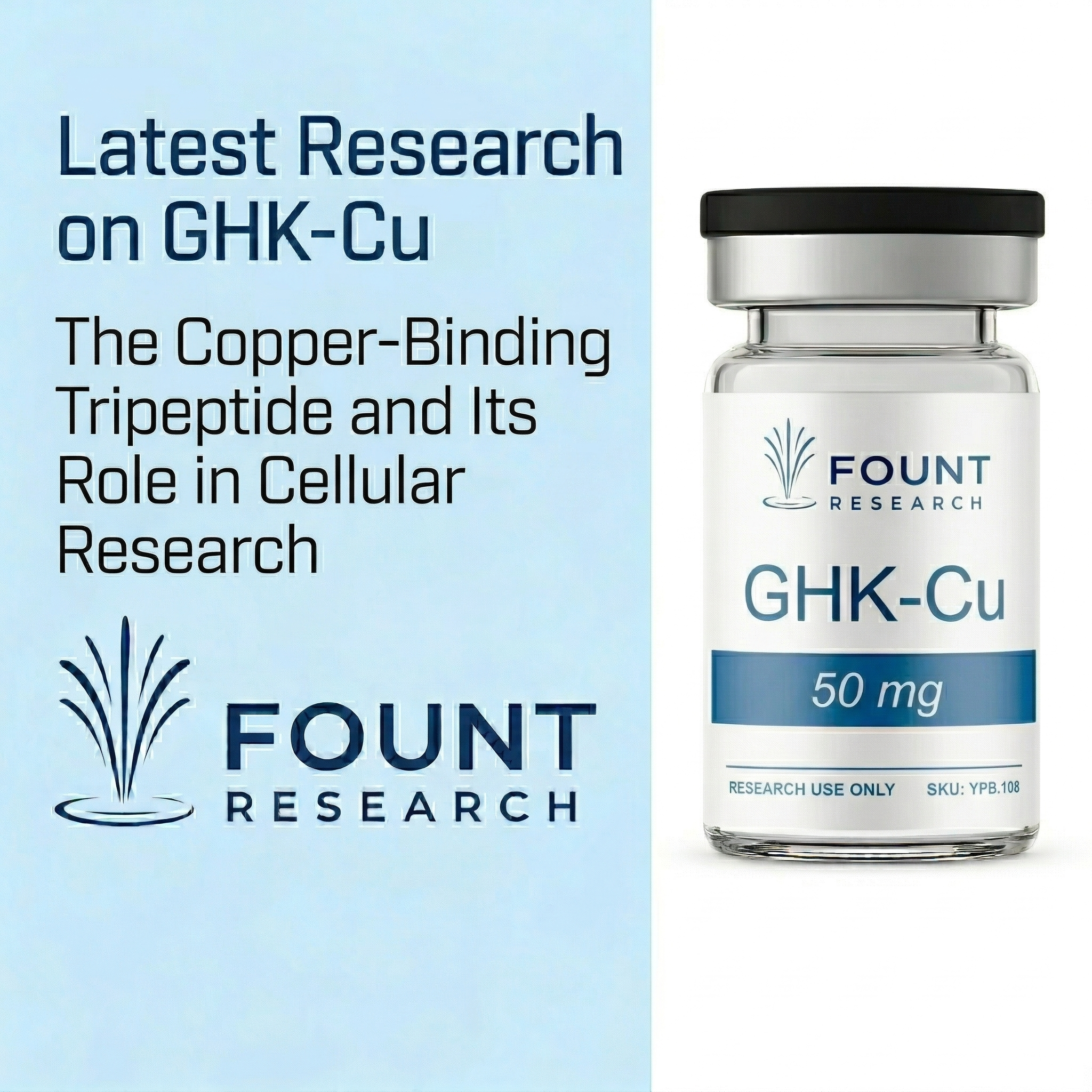
GHK-Cu: The Copper-Binding Tripeptide and Its Role in Cellular Research
GHK-Cu — the copper-bound complex of the tripeptide glycyl-L-histidyl-L-lysine — represents one of the most scientifically documented naturally occurring peptides in the research literature. Discovered in 1973 by Loren Pickart during investigations into age-related differences in liver tissue protein synthesis, GHK-Cu has since accumulated over five decades of peer-reviewed research, spanning wound healing biology, dermal tissue modeling, gene expression science, anti-inflammatory mechanisms, and broader regenerative research contexts.
What makes GHK-Cu scientifically distinctive is both its simplicity and its scale of biological influence. Three amino acids — glycine, histidine, lysine — bound to a copper (II) ion. Yet research published using the Broad Institute of MIT and Harvard's Connectivity Map has documented this compound's influence over more than 4,000 human genes, approximately 6% of the human genome. This article provides an educational overview of GHK-Cu's molecular characteristics, documented research mechanisms, and the current state of the peer-reviewed literature.
All content is for informational purposes only. GHK-Cu is available from Fount Research for research and laboratory use only.

MOLECULAR PROFILE AND NATURAL OCCURRENCE
GHK-Cu (glycyl-L-histidyl-L-lysine-copper[II]) is a naturally occurring tripeptide present in human plasma, saliva, and urine. Research has established that plasma concentrations of GHK decline significantly with age, from approximately 200 ng/mL at age 20 to approximately 80 ng/mL by age 60. This age-related decline coincides with measurable reductions in tissue regenerative capacity, which has made GHK-Cu a subject of considerable research interest in the context of aging biology.
The peptide's copper-binding affinity is central to its biological activity. GHK binds copper (II) ions with high affinity, and the resulting complex GHK-Cu functions differently than the uncomplexed peptide alone. Copper serves as both a catalytic and structural element, playing a role in enzymatic processes including lysyl oxidase and lysyl hydroxylase activity. Both are essential for collagen cross-linking and structural organization.
GHK-Cu is chemically delicate compared to many research peptides. It hydrolyzes under alkaline conditions and is susceptible to oxidation in the presence of free metal ions, which has driven significant research interest in stabilized delivery formulations.

MECHANISMS OF ACTION IN RESEARCH MODELS
1. Gene Expression Modulation — The "Genome Reset" Finding
The most striking finding in GHK-Cu research emerged from genomic analysis using the Broad Institute's Connectivity Map database. When researchers ran GHK through this publicly available library of transcriptional responses, the results were remarkable: GHK-Cu was found to up- or downregulate 4,048 human genes — with gene activity changes greater than 50% — affecting approximately 31.2% of tested genes.
The pattern of gene expression changes observed was described by researchers as resembling a "genome reset" — with aged cell gene expression shifting back toward patterns more characteristic of younger tissue. Specifically, GHK-Cu was observed to:
- Upregulate collagen genes, growth factor genes, and integrin expression
- Downregulate inflammatory mediators, metalloproteinases running in excess, and elevated fibrinogen production
- Activate DNA repair pathways
- Stimulate proteasome function — the cellular machinery responsible for clearing damaged proteins
This finding, referenced in peer-reviewed literature (PMID: 25815981), established GHK-Cu as a compound with unusually broad biological influence for its molecular simplicity.
2. Collagen and Extracellular Matrix Remodeling
GHK-Cu's effects on collagen synthesis represent its most extensively studied application in the research literature. Published studies have documented:
- Stimulation of both collagen Type I (structural support) and Type III (flexibility and early-stage repair) synthesis
- Upregulation of elastin, decorin, and glycosaminoglycan production
- Balanced regulation of matrix metalloproteinases (MMPs) and their inhibitors (TIMPs) — enabling organized tissue remodeling rather than unchecked degradation or excessive fibrosis
Research published in PMC (PMCID: PMC6073405) documented a 9-fold increase in collagen synthesis in rat wound models using peptide-incorporated collagen dressings with GHK. This figure is frequently cited in the broader GHK-Cu research literature as a benchmark for the compound's collagen-stimulating capacity in preclinical models.
3. Wound Healing and Tissue Repair Models
GHK-Cu has been evaluated across a range of tissue repair models in the published literature. Documented research findings include:
- Accelerated wound contraction and re-epithelialization in skin wound models
- Improved outcomes in diabetic and ischemic wound models
- Enhanced healing of gastrointestinal tissue, liver, and bony tissue in animal models
- Stimulation of keratinocyte and fibroblast migration into wound sites
- Promotion of angiogenesis at wound sites through immune and endothelial cell recruitment
A 2024 multicenter study evaluated GHK-Cu gel application following fractional laser resurfacing procedures. The peptide group demonstrated 25% faster epithelial recovery and reduced erythema within 72 hours compared to standard care. Inflammatory markers IL-1β and TNF-α decreased by 30% in the GHK-Cu group.
4. Anti-Inflammatory Activity
Beyond collagen biology, GHK-Cu has been characterized as a broad anti-inflammatory agent in preclinical research. Its documented anti-inflammatory mechanisms include suppression of NF-κB — a central signaling molecule in the inflammatory cascade — and reduction of TNF-alpha in wound and injury models. These findings are consistent across multiple research contexts, including skin, lung, and gastrointestinal tissue models.
5. New Molecular Targets: SIRT1 and STAT3 (2024–2025 Research)
Recent molecular studies published in 2024–2025 have identified SIRT1 (NAD-dependent deacetylase sirtuin-1) and STAT3 (signal transducer and activator of transcription 3) as primary molecular targets for GHK-Cu activity. A 2025 study published in Frontiers in Pharmacology demonstrated that GHK-Cu significantly upregulated SIRT1 expression in experimental colitis models. SIRT1 activation has been associated with longevity-related pathways and metabolic regulation in broader research contexts, representing a newly identified mechanistic dimension for this compound.
Molecular docking analysis revealed direct binding of GHK-Cu to SIRT1 with a binding energy of -8.75 kcal/mol, providing structural evidence for this interaction.
HUMAN CLINICAL RESEARCH
Unlike many research peptides, GHK-Cu has been evaluated in several human clinical investigations:
- A 12-week comparative study found improved collagen production in 70% of subjects in a GHK-Cu treatment group, compared to 50% with vitamin C and 40% with retinoic acid treatment
- A clinical trial conducted by Yuvan Research Inc. using a stabilized topical GHK-Cu gel demonstrated an average 28% increase in collagen density after 3 months of daily application in 21 female subjects, with the top quartile of participants showing a 51% increase, measured via high-resolution dermal ultrasound
- Pilot studies evaluating topical copper tripeptide complexes confirmed increases in both epidermal and dermal skin thickness, improved surface smoothing, and increased skin elasticity
These findings support the mechanistic data from preclinical models while representing early-stage human evidence that requires further replication in larger, controlled trials.

BROADER TISSUE RESEARCH BEYOND DERMATOLOGY
GHK-Cu research has extended well beyond skin tissue. Published literature has documented research applications in:
- Lung connective tissue — including COPD-associated gene expression pattern investigations
- Bony tissue repair models
- Liver and gastric lining research
- Neurological research contexts
The peptide's broad gene expression influence provides a mechanistic basis for these multi-system research findings, though most non-dermatological applications remain at the preclinical stage.

RESEARCH AVAILABILITY
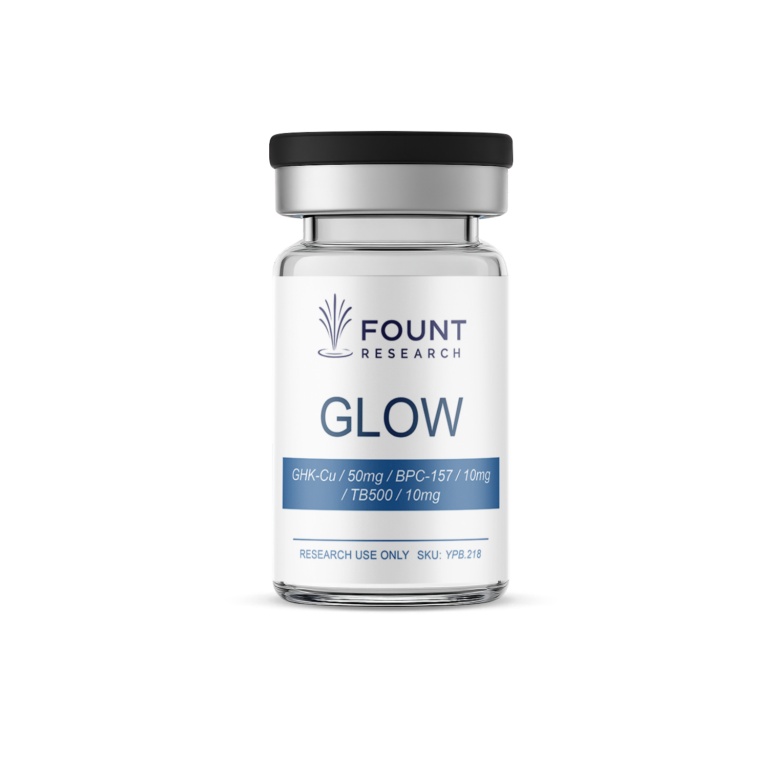
GHK-Cu is available from Fount Research in 50mg and 100mg formats. All batches are supplied with Certificate of Analysis documentation confirming identity and purity.
[View GHK-Cu in the Fount Research Catalog →]

⚠ RESEARCH USE ONLY DISCLAIMER
This article is intended for educational and informational purposes only. GHK-Cu is sold by Fount Research strictly for in-vitro laboratory research and scientific investigation. It is not intended for human or veterinary use, consumption, or therapeutic application. This content does not constitute medical advice and should not be interpreted as a recommendation for any form of use.

REFERENCES:
- Pickart L, Vasquez-Soltero JM, Margolina A. "GHK Peptide as a Natural Modulator of Multiple Cellular Pathways in Skin Regeneration." PMC4508379.
- Pickart L, Margolina A. "Regenerative and Protective Actions of the GHK-Cu Peptide in the Light of the New Gene Data." PMC6073405.
- PMID: 25815981 — Broad Institute Connectivity Map GHK gene expression data
- Frontiers in Pharmacology. 2025. GHK-Cu SIRT1 upregulation study.
- Yuvan Research Inc. IRB-approved GHK-Cu collagen density clinical trial. 2023.
- Yamada S, et al. "Topical Copper Peptides and Post-Procedure Recovery." Dermatol. Res. Pract. 2025.
Related Documentation Resource
For a neutral catalog-review framework that can help compare research-library pages and source records, see the BPC-157 and TB-500 research documentation checklist.
Get new RUO research articles, documentation guides, and product-availability notes from Fount Research.