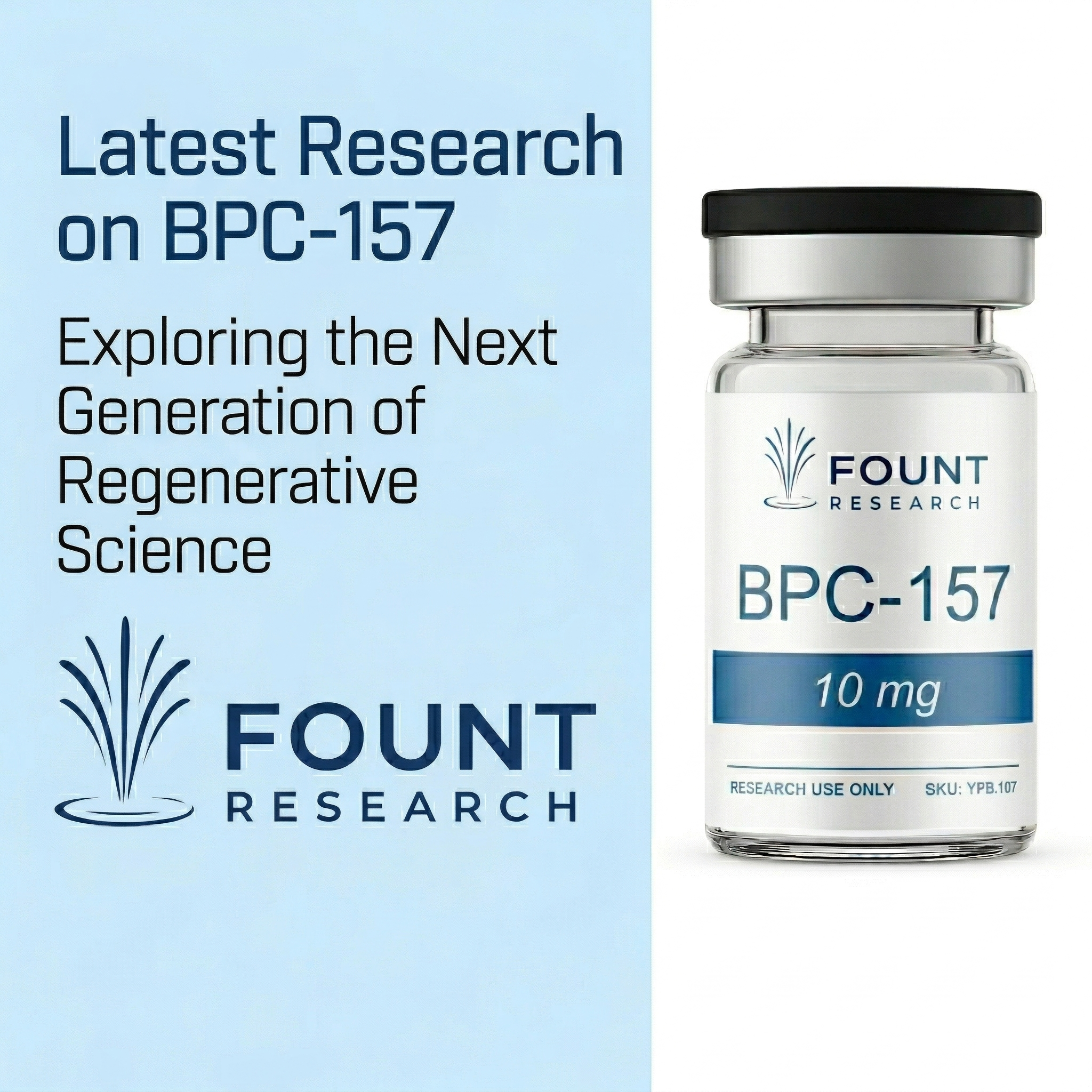
BPC-157: A Research Overview of the Gastric Pentadecapeptide
BPC-157 — formally designated Body Protection Compound-157 — is a synthetic pentadecapeptide consisting of 15 amino acids derived from a partial sequence of a naturally occurring protein isolated from human gastric juice. First described in the scientific literature in the early 1990s, BPC-157 has since become one of the more extensively studied peptides in preclinical research, accumulating a substantial body of published work across musculoskeletal, gastrointestinal, neurological, and cardiovascular research models.
This article provides an educational summary of BPC-157's molecular characteristics, documented mechanisms of action, and the current state of the published research literature. All content is intended for informational purposes and reflects publicly available peer-reviewed data. This compound is available from Fount Research for research and laboratory use only.

MOLECULAR PROFILE
BPC-157 is a pentadecapeptide with the amino acid sequence: Gly-Glu-Pro-Pro-Pro-Gly-Lys-Pro-Ala-Asp-Asp-Ala-Gly-Leu-Val. Its molecular weight is approximately 1,419 daltons.
Several structural properties distinguish BPC-157 from many other research peptides:
Stability Profile
Unlike many peptides that rapidly degrade in biological environments, BPC-157 demonstrates notable stability in human gastric juice, remaining intact for extended periods under conditions that would denature most peptide sequences. Researchers attribute this stability in part to the compound's unusually high proline content — four proline residues within a 15-amino-acid chain — which confers resistance to enzymatic hydrolysis by trypsin and chymotrypsin.
Solubility
BPC-157 is freely soluble in aqueous solutions at normal physiological pH, which has facilitated its use across multiple administration routes in preclinical research models, including intraperitoneal, subcutaneous, intramuscular, and oral delivery.
Half-Life
Pharmacokinetic data from preclinical models indicates a relatively short half-life following intramuscular or intravenous administration — typically under 30 minutes — reflecting rapid clearance from systemic circulation.

MECHANISMS OF ACTION IN PRECLINICAL RESEARCH
The mechanisms through which BPC-157 exerts its observed effects in research models are complex and interconnected. Current published literature has documented several primary pathways:
1. VEGFR2 Pathway Activation and Angiogenesis
One of the most studied mechanisms involves BPC-157's interaction with vascular endothelial growth factor receptor 2 (VEGFR2). Research published in peer-reviewed journals has documented that BPC-157 activates the VEGFR2 pathway in endothelial cells, triggering downstream phosphorylation events that facilitate angiogenesis — the formation of new blood vessel networks. This pro-angiogenic activity is considered a primary mechanism underlying the peptide's observed effects on tissue repair in preclinical injury models.
Associated downstream signaling includes activation of focal adhesion kinase (FAK)-paxillin complexes, which mediate cell migration and attachment — both essential processes for wound site repopulation. The Egr-1 transcription factor is also upregulated, acting as a master regulatory switch for genes involved in cell growth and vessel formation.
2. Growth Hormone Receptor Expression
Research published in PMC (PMCID: PMC6271067) documented that BPC-157 enhances growth hormone receptor expression in tendon fibroblasts. This finding is significant in the context of musculoskeletal research, as growth hormone signaling — mediated through JAK-STAT pathways and downstream insulin-like growth factor 1 (IGF-1) production — plays a documented role in skeletal muscle maintenance, collagen synthesis, and connective tissue integrity.
3. Anti-Inflammatory Cytokine Modulation
Multiple preclinical studies have documented BPC-157's effects on inflammatory mediators. Research models have demonstrated reductions in pro-inflammatory cytokines following BPC-157 administration, with particular documentation in musculoskeletal and gastrointestinal injury contexts. A 2025 systematic review published via the Sage Journals platform, covering 36 studies from 1993 to 2024, confirmed that BPC-157 was associated with reduced inflammatory cytokine expression across multiple research models.
4. Nitric Oxide System Modulation
BPC-157 has also been studied in the context of nitric oxide (NO) system modulation. Research models have documented interactions with both the L-arginine/NO synthesis pathway and NO synthase activity, which may contribute to the peptide's observed effects on vascular function and tissue perfusion in injury models.
5. Cytoprotective and Organoprotective Activity
The compound was originally identified in the context of gastroprotection, and early research established its cytoprotective properties across gastrointestinal tissue models. Subsequent research expanded these observations across liver, heart, endothelial, and musculoskeletal systems — earning BPC-157 the characterization of a "pleiotropic" compound in the published literature, meaning it exerts effects across multiple organ systems through multiple pathways.

SUMMARY OF THE PRECLINICAL RESEARCH LANDSCAPE
A 2025 systematic review published by Vasireddi et al. in a peer-reviewed orthopaedic surgery journal conducted a comprehensive synthesis of 36 BPC-157 studies published from 1993 to 2024. The review's findings included:
- BPC-157 improved functional, structural, and biomechanical outcomes across muscle, tendon, ligament, and bone injury models in preclinical (animal) research
- Growth hormone receptor expression enhancement and upregulation of angiogenic pathways were consistently documented
- Inflammatory cytokine reduction was observed across multiple models
- The safety profile in preclinical models showed no documented toxic effects across a range of dosing protocols
A separate 2025 scoping review published in Current Reviews in Musculoskeletal Medicine examined BPC-157's molecular mechanisms and therapeutic potential in musculoskeletal healing contexts, further establishing the peptide's extensive preclinical research base.
A 2025 pilot study — one of the very few human investigations to date — evaluated intravenous BPC-157 infusion in two healthy adult subjects at doses of 10mg and 20mg. No adverse effects on cardiac, hepatic, renal, thyroid, or metabolic biomarkers were observed. Pharmacokinetic analysis confirmed plasma clearance within 24 hours, consistent with the compound's known short half-life.
It is important to note that the overwhelming majority of BPC-157 research remains preclinical. Robust human clinical trial data is not yet available, and this compound has not been approved by the FDA or any regulatory agency for therapeutic use in humans.
REGULATORY CONTEXT
In 2023, the FDA designated BPC-157 as a Category 2 bulk drug substance, indicating it cannot be compounded by commercial pharmaceutical companies for clinical use. This designation reflects the current regulatory position that insufficient safety and efficacy data exists for approved therapeutic application.
BPC-157 is also listed on the World Anti-Doping Agency (WADA) Prohibited List under the S0 category of non-approved substances.
Fount Research supplies BPC-157 exclusively as a research-grade compound for in-vitro and laboratory research purposes. All products are third-party tested for purity and identity verification.

RESEARCH AVAILABILITY
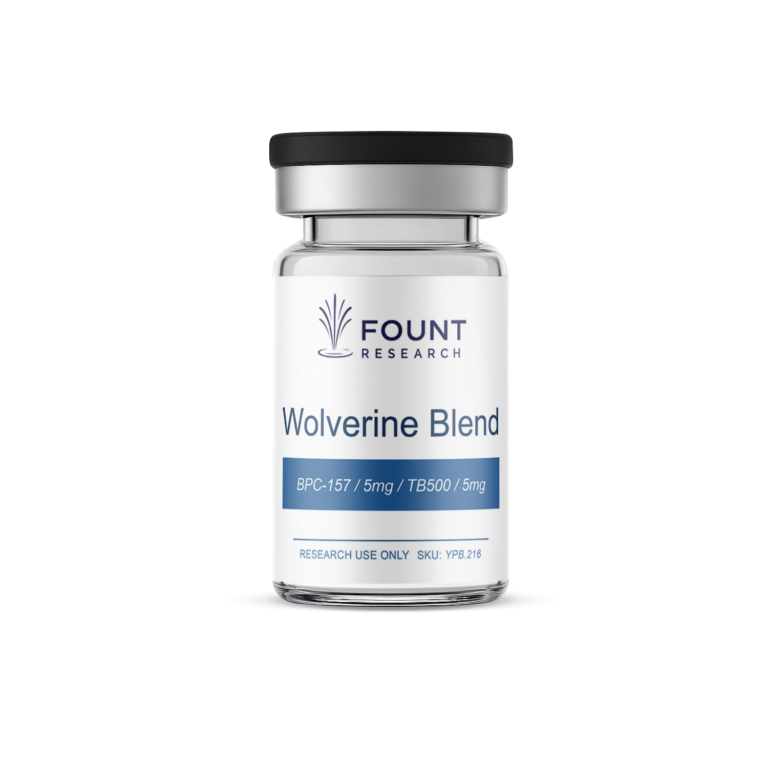
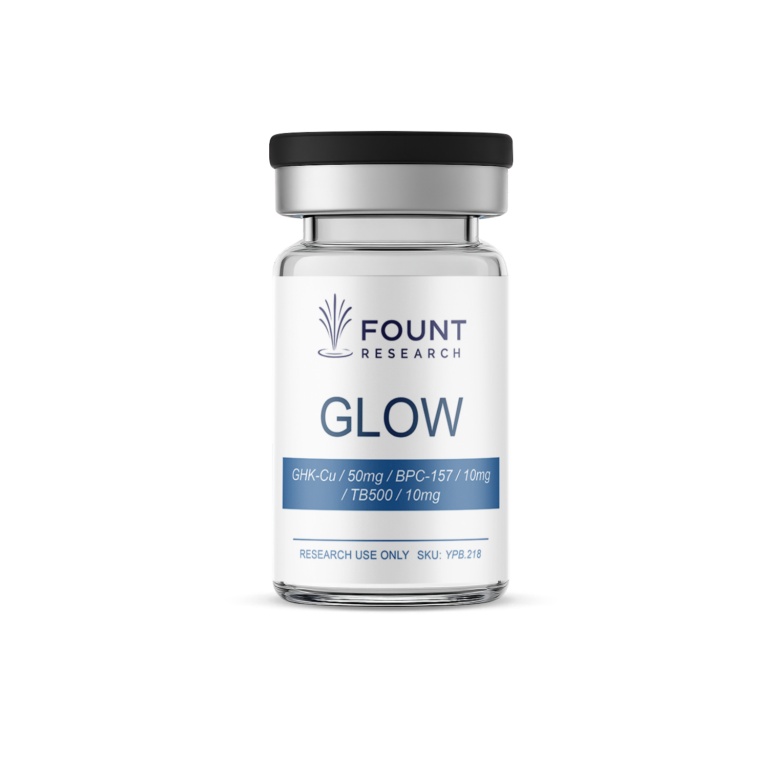
BPC-157 is available from Fount Research in 5mg, 10mg, and 20mg formats.
[View BPC-157 in the Fount Research Catalog →]

⚠ RESEARCH USE ONLY DISCLAIMER
This article is intended for educational and informational purposes only. BPC-157 is sold by Fount Research strictly for in-vitro laboratory research and scientific investigation. It is not intended for human or veterinary use, consumption, or therapeutic application. This content does not constitute medical advice and should not be interpreted as a recommendation for any form of use. Always consult a licensed healthcare professional for any health-related questions.

REFERENCES:
- Vasireddi N, et al. "Emerging Use of BPC-157 in Orthopaedic Sports Medicine: A Systematic Review." 2025. PMID: 40756949
- Hsieh MJ, et al. "Therapeutic potential of pro-angiogenic BPC157 is associated with VEGFR2 activation." J Appl Physiol.
- PMC Article PMCID: PMC6271067 — BPC-157 and growth hormone receptor expression
- Sikiric P, et al. "Multifunctionality and Possible Medical Application of BPC 157 Peptide." Pharmaceuticals 2025;18(2):185
- Lee and Burgess. 2025 pilot human study. Pharmacokinetic analysis of IV BPC-157.
- FDA Bulk Drug Substance Category 2 Designation. 2023.
Related Documentation Resource
For a neutral review framework covering catalog fields, source records, and BPC-157/TB500 context, see the BPC-157 and TB-500 research documentation checklist.
Get new RUO research articles, documentation guides, and product-availability notes from Fount Research.