Research Peptide Documentation Standards: A Laboratory Review Checklist
Research Context
Research peptide documentation standards help laboratory buyers organize catalog records, source materials, and analytical documents before selecting an item for an established research workflow. A consistent review does not establish suitability for a particular experiment. It helps the reviewer identify what a document says, which material it describes, and whether related records can be traced to the same item or batch.
This checklist focuses on document structure and recordkeeping. It does not provide medical guidance, preparation instructions, experimental protocols, or information about human or veterinary use.
Start With The Catalog Record
Begin with the information visible on the catalog page. The record should make it possible to distinguish one listing from another without relying on assumptions.
Record the following fields where they are available:
- Product name
- Listed amount or format
- SKU or catalog identifier
- Single-compound or blend classification
- Category placement
- Availability status
- Research-use-only statement
- Links to related educational or analytical documentation
For a blend, list each named component and its stated amount exactly as presented. Do not infer an unstated composition, specification, or analytical result.
Match Documents To The Listed Material
A document is most useful when its identifiers can be compared with the catalog or inventory record it is intended to accompany. Reviewers can look for:
- Material or product name
- Batch, lot, or other distinctive identifier
- Document issue, analysis, release, expiry, or retest date, as applicable
- Name of the document issuer
- Tests and methods listed in the document
- Results and any stated acceptance criteria
- Authorization or review information
Within its stated active-pharmaceutical-ingredient scope, FDA's Q7 guidance describes certificates of analysis as records that identify the material and list tests, limits, and results. The guidance does not establish requirements for Fount catalog items and is cited only as a public example of structured record fields.
Keep Analytical Terms Separate
Analytical methods answer different questions, so method names should not be treated as interchangeable. USP's published discussion of synthetic peptide reference standards describes multiple attributes and methods, including chromatographic approaches and mass-based analysis.
When reviewing a document, record the method exactly as written. Avoid converting a method label into a broader claim about the material. A document that lists one analytical result should not be represented as if it establishes characteristics that were not evaluated or reported.
Preserve The Record Trail
A practical review file should preserve the relationship among the catalog record, the referenced item, and the supporting document. A simple record can include:
| Field | Review note |
|---|---|
| Catalog page | URL and date reviewed |
| Product identifier | Name, SKU, and listed format |
| Batch or lot identifier | Record exactly as shown |
| Document issuer | Organization named on the document |
| Document date | Issue, analysis, release, or retest date |
| Methods listed | Copy method names without reinterpretation |
| Results listed | Record values and units exactly as shown |
| Related files | Preserve source links or controlled file references |
| Review status | Complete, incomplete, or needs clarification |
Within its stated bioanalytical scope, FDA's method-validation guidance illustrates record fields such as reference certificates, batch numbers, manufacturers, dates, and storage records. It is not presented as a standard that governs Fount catalog items.
Review Blend Listings With Extra Care
Blend listings contain more than one named component, making clear catalog identification especially important. Review the product title, stated component amounts, SKU, category, and associated links as separate fields. Supporting documentation should not be assumed to cover every named component unless the document itself makes that relationship clear.
Researchers reviewing Fount's catalog can use the following pages for neutral navigation:
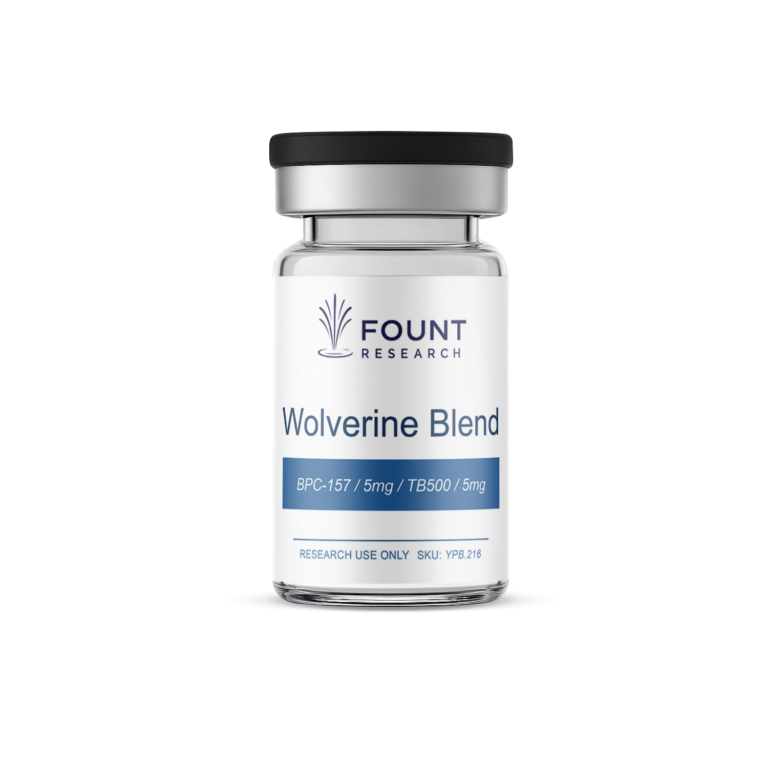
- Wolverine Blend BPC-157 / TB500 research-use-only listing
- Peptide Blends category
- Research Peptides category
- BPC-157 and TB500 research documentation hub
These links are provided for catalog navigation and research-library review. They are not recommendations for use.
Laboratory Review Checklist
Before closing a documentation review, confirm that:
- The catalog item is clearly identified.
- Listed amounts and components were transcribed without inference.
- Any supporting document can be associated with the intended item or batch from identifiers shown in the record.
- Document dates and the issuer are recorded.
- Analytical method names and reported results remain separate.
- Missing information is marked as unavailable rather than guessed.
- Educational sources are distinguished from product-specific records.
- The research-use-only boundary remains clear throughout the file.
Source Records
The following sources retain their own stated scopes. Their inclusion does not claim that they govern Fount products or establish any product characteristic.
- FDA Q7A Good Manufacturing Practice Guidance for Active Pharmaceutical Ingredients
- FDA Bioanalytical Method Validation Guidance for Industry
- USP reference standards supporting the quality of synthetic peptide therapeutics
Research-Use-Only Note
This educational resource is for laboratory research context only and does not describe human or veterinary use. Fount Research products are intended for qualified laboratory research contexts only.
Get new RUO research articles, documentation guides, and product-availability notes from Fount Research.